What Goes Into a Piece of Glass: Borosilicate, Colour and Craft
Material, technique and hours: what separates one piece of glass from another.
See the Heady Gallery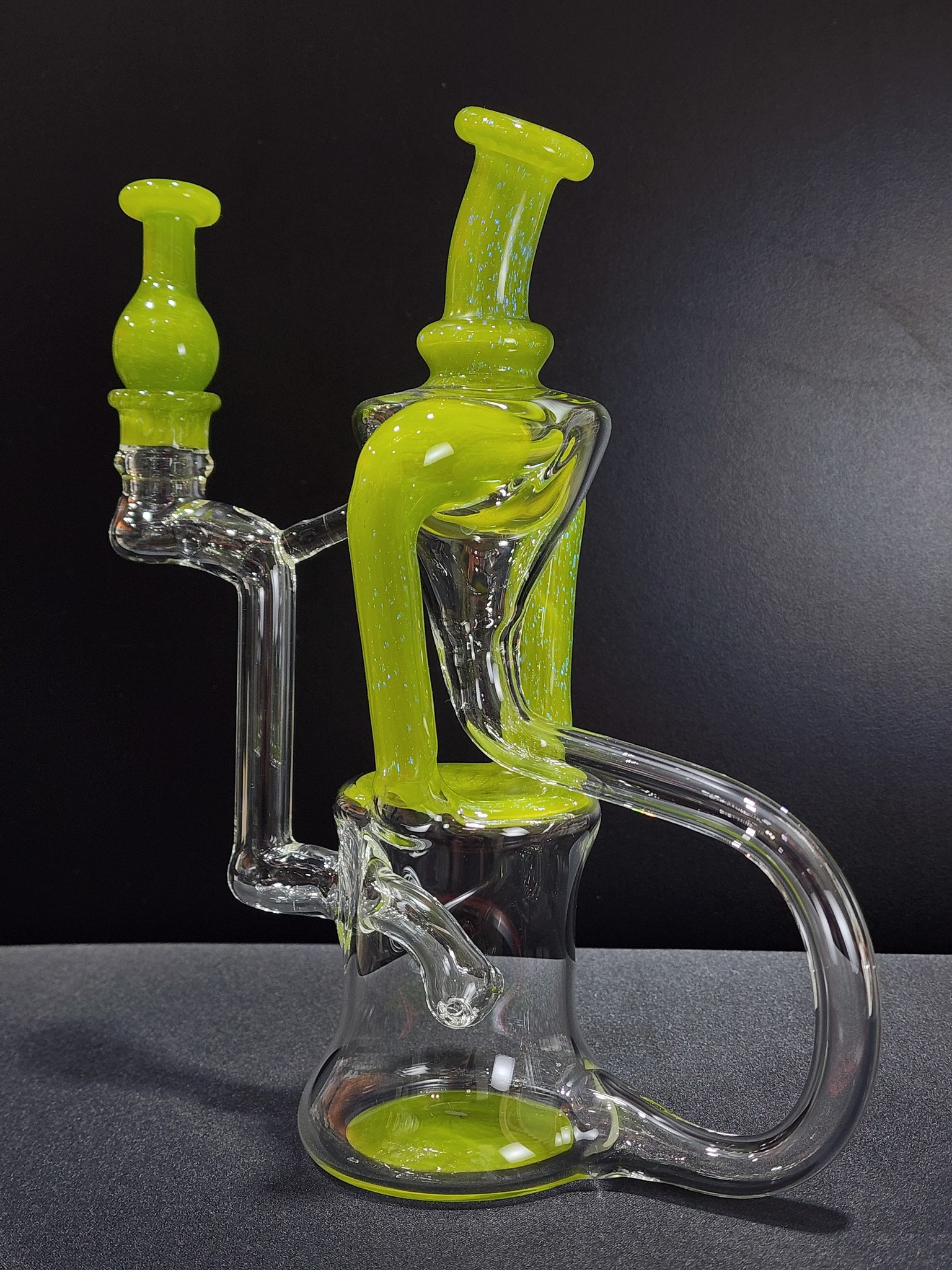
Two pieces of glass can share a size and a shape and sit a few hundred dollars apart on the shelf. The difference is almost always material, technique and hours.
This is a short guide to what you are looking at.
Why borosilicate
Borosilicate is glass made with silica and boron trioxide. It was developed in Germany in the late 1800s by the chemist Otto Schott, and it is the same family of glass used for laboratory equipment.
Its useful property is low thermal expansion. It grows and shrinks roughly a third as much as ordinary soda-lime glass when its temperature changes, so it copes far better with heat.
That is why labs use it, and why flameworkers do too.
Flameworking
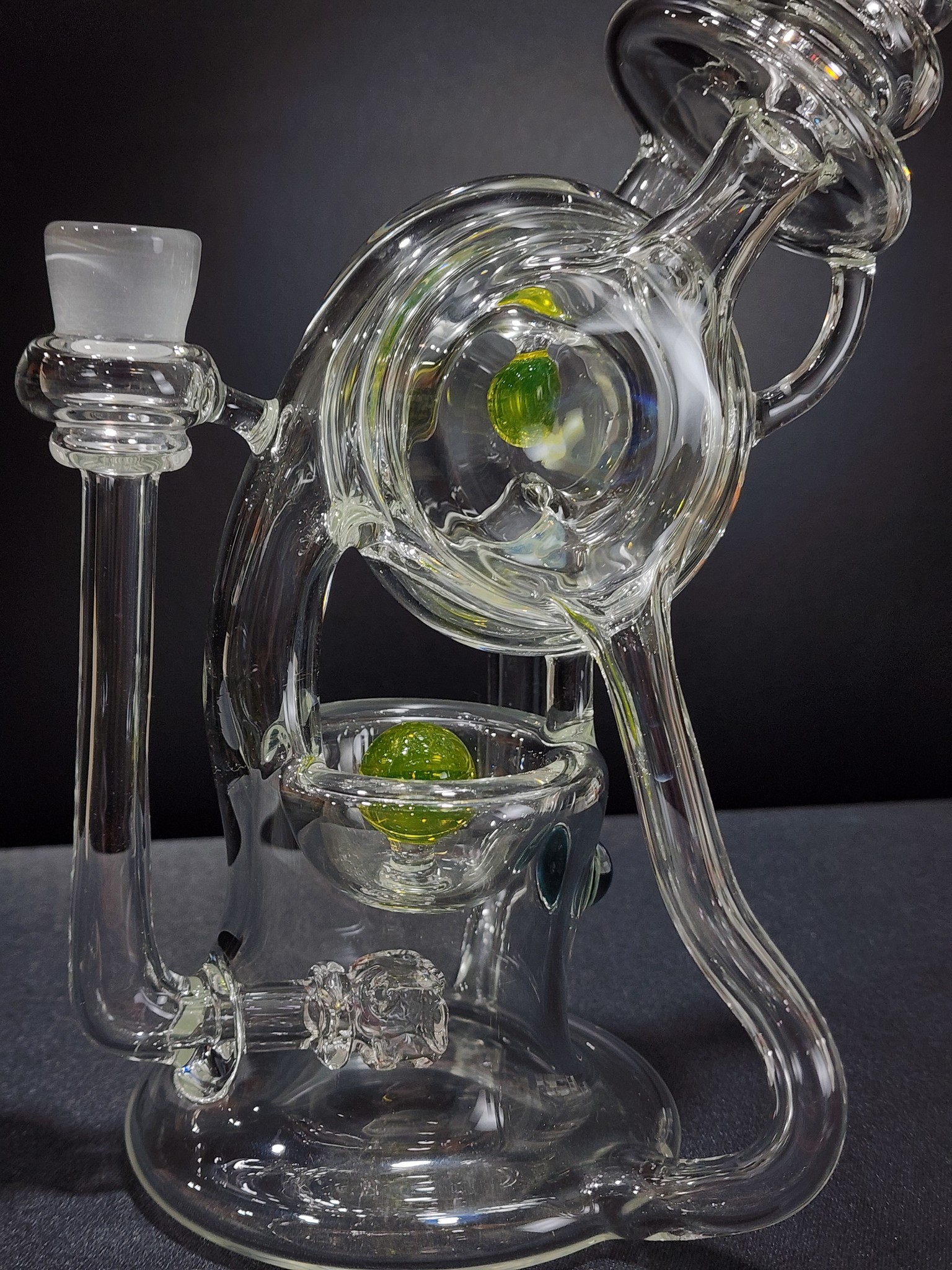
Handmade pieces like these are flameworked, also called lampworked. The artist shapes rods and tubes of glass in the flame of a bench torch, instead of gathering molten glass from a furnace.
It is slow, close work. Every seal between two sections is made by hand, and a complicated piece can have dozens of them.
When the shaping is finished, the piece goes into a kiln to be annealed: held at around 560°C, then cooled slowly. This releases the stress that builds up while the glass is worked. A piece that skips this step can look perfect and crack weeks later for no visible reason.
Where the colour comes from
- Coloured glass gets its colour from metal oxides mixed into the glass itself.
- Fuming means vaporizing a small amount of silver or gold in the flame so it settles on the glass as a thin film. Fumed glass changes colour with the light and with whatever sits behind it.
- Dichroic glass carries microscopically thin layers of metal oxides. It reflects one colour and lets another pass through, so it flashes as you turn it.
- UV-reactive glass looks ordinary in daylight and glows under ultraviolet light.
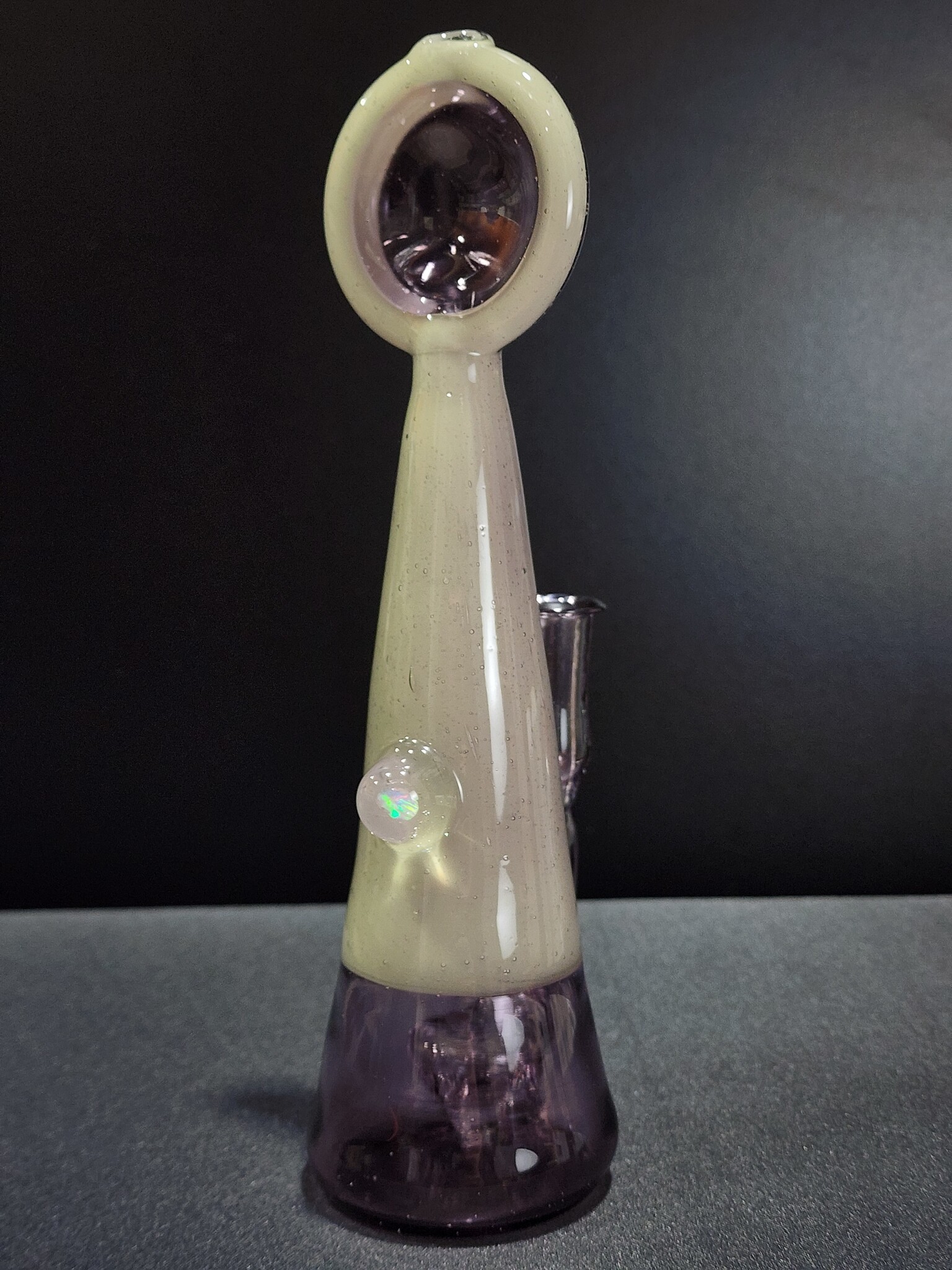
- Opals set into glass are usually lab-grown, because they have to survive the heat of the flame. They are encased in clear glass, which also magnifies them.
How to judge a piece
- Wall thickness should be even. Thin spots are weak spots.
- Seals between sections should be smooth and fully melted in, with no sharp creases.
- Joints should be ground evenly. Standard sizes are 10 mm, 14 mm and 18 mm, which matters when you buy a replacement part.
- The base should sit flat and steady. If it rocks on the counter, keep looking.
- Symmetry is a fair test of skill, unless the piece is plainly meant to be lopsided.
- A signature or maker's mark tells you who stands behind the work.
Made in Canada
The Heady Gallery is where we keep artist-made work, including pieces by Canadian glass artists. Most listings name the maker.
General information about materials and craft. The Smoke Hut sells to adults of legal age in their province.